
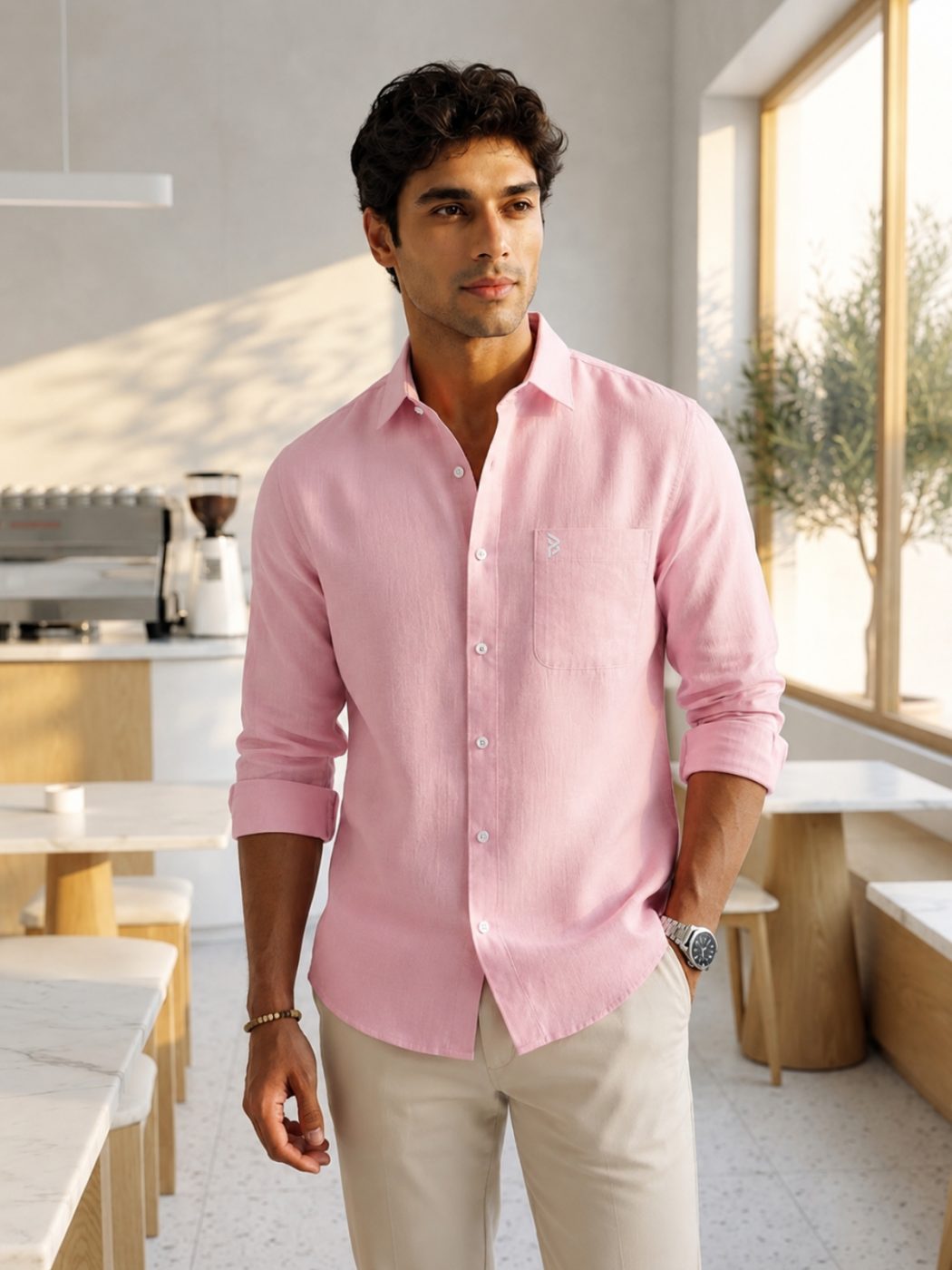
Linen shirts for men are the smartest answer to the Indian summer. When Jaipur crosses 44 degrees, when Chennai air turns thick and sticky, or when a Delhi afternoon feels like standing next to an open oven, the fabric on your back decides how the rest of your day goes. A good linen shirt lets air move, pulls sweat away from your skin and dries quickly, so you stay cooler and look sharp long after a regular shirt has given up.
This guide is written by the team at Bemount. We choose the cloth for every piece we sell, and linen is the fabric we work with most. We will keep it practical. What linen actually is, how it compares with cotton, pure linen versus blends, fit, colours, what works in your city, how to style it, and how to look after it so it lasts for years. No fashion jargon. Just what you need to buy well.
Here is everything you should know before you buy a linen shirt in India in 2026.
Table of Contents
1. Why Linen Shirts for Men Work So Well in India
2. Who We Are and Why It Matters
3. Linen vs Cotton: What Actually Changes
4. Quick Verdict: What to Look For
5. Pure Linen or a Linen-Cotton Blend?
6. Fabric Weight, Weave and Transparency
7. Getting the Fit Right
8. The Right Linen for Your City and Climate
9. How to Style Linen for Office, Weddings and Weekends
10. Colours That Work in Indian Heat
11. The Wrinkle Question, Answered Honestly
12. Linen Shirt Care: Washing, Drying and Storage
13. Common Mistakes to Avoid
14. How Bemount Helps You Buy Linen Right
Closing Thoughts
Frequently Asked Questions
How-To: Choose Your First Linen Shirt
1. Why Linen Shirts for Men Work So Well in India
Linen is woven from the fibres of the flax plant. Those fibres are long, strong and slightly stiff, so the weave never packs as tightly as cotton. The small gaps in the cloth let air pass through freely, and that is the whole secret. Heat escapes from your body instead of getting trapped against your skin.
Linen also handles sweat better than most fabrics. It absorbs moisture, then releases it into the air quickly, so the shirt dries fast and does not cling to your back. Flax is one of the strongest natural fibres in the world, which is why a well made linen shirt lasts for many summers. And unlike most fabrics, linen gets softer and more comfortable every time you wash it.
Now think about the Indian calendar. Most of the north spends March to June in dry, punishing heat, then moves into a humid monsoon. Much of the south and the coast stays warm and humid for most of the year. For a country like this, linen is not a luxury trend. It is simply the most sensible cloth you can wear for a large part of the year.
Bemount Perspective In Indian heat, the fabric matters more than the brand name, the print or the price tag. A breathable linen shirt that fits well will keep you more comfortable than an expensive shirt in the wrong cloth. Get the fabric right first, then the fit, then the colour. Style follows naturally. |
2. Who We Are and Why It Matters
Before you take buying advice from anyone, you should know who is giving it. We are Bemount, a menswear label selling shirts, t-shirts, trousers and accessories across India. Our catalogue is organised around three things: fit, fabric and occasion. Linen is at the centre of it. Right now 32 of the 104 pieces we stock are cut in linen or linen blends, from everyday shirts to linen trousers and our Rajputana linen hunter shirts.
Why does that matter to you? Because we deal with linen every single day. We choose the cloth, we check how it wears, and we see which shirts come back through returns and why. The most common reasons are simple: the wrong size, a fabric that felt too sheer, or a buyer who did not expect linen to crease. This guide is built to help you avoid exactly those problems.
We will also be straight with you. Linen is not perfect for every situation, and we will tell you where a blend or a different fabric makes more sense. We would rather you buy one shirt you love than three you never wear.
Expert Note: Feel the Cloth Before the Price Pick up a linen shirt and hold it against the light. You should see a natural, slightly uneven texture. Crush a corner in your hand for a few seconds. Real linen creases, while polyester linen-look fabric springs back almost perfectly. Always check the fabric composition on the label or product page. The word linen in the name does not mean the shirt is linen. |
3. Linen vs Cotton: What Actually Changes
Cotton is a wonderful fabric and most of us grew up in it, so it is the natural comparison. Here is how the two behave in real Indian conditions.
Factor | Linen | Cotton |
Airflow | Very high, open weave | Good, but denser weave |
Sweat handling | Absorbs and releases fast | Absorbs well, dries slowly |
Drying time | Quick | Slower, can feel damp |
Cling in humidity | Very little | Can stick to the back |
Wrinkles | Creases easily | Creases less |
Softness over time | Gets softer every wash | Can thin out with age |
Durability | Very strong fibre | Good |
Price | Usually higher | Usually lower |
The short version is this. Cotton is comfortable and easy, but on a truly hot or humid day it holds on to moisture and starts to feel heavy. Linen keeps moving air and moisture away from your body. The trade off is creasing and a higher price, and we will deal with both honestly further down.
4. Quick Verdict: What to Look For
If you want the short answer, here it is. Look for real linen or a linen-rich blend, a light weight for peak summer, a fit with a little room, a colour that suits the heat, and a brand with a fair return policy. Here is what to prioritise.
What to check | Why it matters | Priority |
Fabric composition | Real linen or a linen blend, not polyester | High |
Fabric weight | Lighter cloth stays cooler in summer | High |
Fit and shoulder | Linen does not stretch, so fit is key | High |
Colour | Light shades reflect heat | High |
Stitching and buttons | Shows overall build quality | Medium |
Transparency | Matters most for white shirts | Medium |
Return window | Lets you check fit at home | Medium |
Brand logo or trend print | Adds little to comfort | Low |
Keep this table in mind as we go deeper. Each point gets a proper explanation below.
5. Pure Linen or a Linen-Cotton Blend?
This is the first real choice you will make, and there is no wrong answer. It depends on where you will wear the shirt and how much you mind creases.
A pure linen shirt is the coolest option you can buy. It has the most texture, the most airflow and that relaxed, lived-in look people love. It also creases the most and usually costs a little more. It is the best choice for peak summer, dry heat, holidays, day weddings and anyone who enjoys the natural look of linen.
A linen cotton shirt mixes the two fibres, often somewhere around half and half. It feels softer from the very first wear, creases noticeably less and holds a neater shape through a long day. It is a touch warmer than pure linen, but still far more breathable than most regular shirts. It is the best choice for the office, for long commutes and for anyone who wants linen comfort with less ironing.
Our honest advice is simple. If you are buying your first linen shirt for work, start with a blend. If you are buying for weekends, travel or the hottest months, go pure linen. Most men end up owning both.
6. Fabric Weight, Weave and Transparency
Not all linen feels the same, and weight is the reason. Fabric weight is often measured in GSM, which means grams per square metre. The lower the number, the lighter and airier the cloth.
For peak Indian summer, lighter linen, roughly in the 120 to 160 GSM range, is ideal. It breathes freely and feels almost weightless. Slightly heavier linen has more body and structure, drapes better and works well as an overshirt in the cooler months. If a product page does not list GSM, judge by feel and by how much light passes through the fabric.
The weave matters too. Real linen shows small natural thick and thin spots called slubs. These are not defects. They are part of the character of the cloth. Finally, check transparency. Very light white or ecru linen can be slightly sheer in bright sun. If that bothers you, wear a thin skin-tone vest underneath rather than a white one, which tends to show through.
7. Getting the Fit Right
Fit matters more with linen than with almost any other fabric, because linen has almost no stretch. A shirt that is a little tight across the chest or shoulders will pull, crease badly and feel uncomfortable in the heat. A little room is your friend.
Start with the shoulders. The shoulder seam should sit right at the edge of your shoulder, not halfway down your arm and not on top of your collarbone. Then raise both arms and reach forward. If the shirt pulls tight across your back, go up a size. Sleeves should end at your wrist bone, and if you plan to roll them, a slightly roomy sleeve rolls far more neatly.
At Bemount we cut our pieces in four clearly defined fits: regular, tailored, modern and relaxed. Regular suits most body types and most occasions. Tailored and modern fits are shaped closer to the body for a sharper office or evening look. Relaxed fits are cut with extra room and are perfect for linen in peak heat. Whichever brand you buy from, check the real measurements in the size guide against a shirt you already own and love. It is the most reliable size check there is.
One more point. Pure linen can shrink slightly on its first hot wash. Always wash in cold or lukewarm water and you will keep the fit you paid for.
8. The Right Linen for Your City and Climate
India is not one climate, so the right linen shirt in Jodhpur is not always the right one in Kochi. Here is how we would think about it region by region.
Rajasthan: Jaipur, Jodhpur, Udaipur, Kota and Bikaner. This is dry, intense heat with fierce sun. Pure, light linen in white, ecru or sand is the ideal choice. A full-sleeve shirt with the sleeves rolled down in the afternoon protects your arms from direct sun far better than a half sleeve. Our Rajputana linen hunter shirts were named with exactly this kind of heat in mind.
Delhi NCR and Uttar Pradesh: Delhi, Noida, Gurugram, Lucknow, Kanpur, Agra and Varanasi. You get it all here: dry heat in May and June, sticky humidity in the monsoon and a proper winter. Wear pure linen in peak summer, switch to a linen-cotton blend in the humid months, and use heavier linen as a light overshirt layered over a t-shirt in October, November, February and March.
Mumbai, Pune and Goa. Humidity is the main challenge, followed by a long, heavy monsoon. Linen dries quickly, which is a real advantage in wet weather. Mid tones like olive, sage or navy hide splash marks better than white during the rains.
South India: Chennai, Bengaluru, Hyderabad and Kerala. Chennai and Kerala stay warm and humid for most of the year, so pure linen in a relaxed fit is the most comfortable choice for daily wear. Bengaluru is milder, which makes linen-cotton blends a smart all-year option. Hyderabad sits in between, with dry summers that suit pure linen well.
Kolkata and the East. Heavy, sticky humidity is the defining feature. Loose fits in pure linen let air circulate and keep the shirt off your skin, which makes a big difference over a long day.
Climate Note: One Rule for Every City The hotter and more humid your city, the lighter and looser your linen should be. The more formal your day, the more a linen-cotton blend helps you stay neat. In the rare Indian winter, heavier linen still works as a stylish layer over a t-shirt. |
9. How to Style Linen for Office, Weddings and Weekends
One of the best things about linen is how easily it moves between occasions. Here is how to wear it well in three common situations.
For the office, choose a linen-cotton blend in a tailored or modern fit. Solid colours and fine stripes look the most professional. Tuck it into chinos or tailored trousers, add a leather belt and a pair of derby shoes or loafers, and you have a sharp, cool office outfit that survives the commute.
For weddings and functions, linen is a perfect choice for day ceremonies, haldi, mehendi and beach weddings in Goa or Kerala. A pure linen shirt in white, ecru or sand paired with linen trousers in a matching or slightly darker tone looks elegant and keeps you comfortable through long outdoor events. Finish with loafers or leather sliders.
For weekends and travel, go relaxed. A relaxed-fit linen shirt worn open over a plain t-shirt, sleeves rolled, with linen drawstring pants or chinos is easy, cool and comfortable. This is where linen really shines, and it packs lightly for holidays too. If you are building a small set of summer shirts for men, two linen shirts and one pair of linen trousers will carry you through most of the season.
10. Colours That Work in Indian Heat
Colour affects how hot you feel, not only how you look. Lighter colours reflect more sunlight, while darker colours absorb it and warm up faster in direct sun.
For daytime heat, white, ecru, sand, sky blue and pale olive are your best friends. They look fresh and stay noticeably cooler outdoors. Mid tones like sage, olive, tobacco and dusty rose are wonderfully versatile and hide the odd sweat mark better than very pale shades. Light grey is worth avoiding in peak summer, because it shows sweat more than almost any other colour. Save navy, charcoal and black for evenings, indoor events and the cooler months.
A simple starting set is one white or ecru shirt, one sky blue shirt and one mid tone like olive or sand. Those three work with almost any trouser you already own.
11. The Wrinkle Question, Answered Honestly
Let us be honest about the one thing everyone asks. Yes, linen creases. It is the nature of the flax fibre, and no amount of marketing changes that. The good news is that linen creases are soft and relaxed, not the sharp, crumpled look of a cheap shirt. Many people consider that easy texture part of the appeal.
You can control it though. Hang the shirt as soon as the wash finishes. Iron it while it is still slightly damp. A quick steam in the morning takes out most creases in under a minute. And if you need a crisp look all day for work, a linen-cotton blend creases far less while keeping most of the comfort.
Our view is simple. A few soft creases on a cool, comfortable shirt beat a perfectly smooth shirt that leaves you soaked by noon.
12. Linen Shirt Care: Washing, Drying and Storage
Good linen shirt care is easy, and it is the difference between a shirt that lasts one season and one that lasts five. Follow these simple habits.
• Wash cool. Use cold or lukewarm water on a gentle cycle, or hand wash. Hot water can shrink linen and fade colour.
• Use a mild detergent. Skip bleach, which weakens flax fibres and yellows white linen over time.
• Turn it inside out. This protects the colour and the surface of the fabric.
• Go easy on the spin. A short, low spin reduces deep creases. Never wring linen by hand.
• Dry in the shade. Strong Indian sun fades coloured linen quickly. Dry it on a hanger, in the shade, in open air.
• Iron while damp. Use a medium to high setting on the reverse side for the best finish.
• Store it dry. In the monsoon, make sure the shirt is completely dry before you put it away to avoid mildew and musty smells.
Treat it this way and your linen will keep getting softer and more comfortable with every wash.
Care Note: The Two Rules That Matter Most Cold water keeps your fit. Hot water is the main reason linen shirts shrink. Shade keeps your colour. Harsh afternoon sun is the main reason coloured linen fades. Follow just these two and your shirt will look good for years. |
13. Common Mistakes to Avoid
Learning from other buyers is easier than learning the hard way. Here are the mistakes we see most often.
The first is buying a shirt called linen that is actually polyester or mostly synthetic. Always check the composition. The second is choosing a tight fit, which pulls and creases badly because linen does not stretch. The third is washing in hot water and losing a size in one go. The fourth is buying a dark, heavy linen shirt for a noon event in May. And the fifth is judging linen on day one. It softens noticeably over the first few washes, so give it time.
Avoid these five and your first linen shirt will very likely become your favourite shirt of the summer.
14. How Bemount Helps You Buy Linen Right
Here is how we make buying linen simpler. Our catalogue is organised by fit, fabric and occasion, so when you filter for linen, you see linen. Our linen range covers pure linen shirts, linen-cotton shirts, our Rajputana linen hunter shirts and linen trousers built for Indian heat.
Every product page carries real measurements, and our size guide explains each of our four fits in plain words. We stock sizes from S to XXL, with waist sizes on every trouser. Delivery is free on all products, cash on delivery is available on eligible orders above Rs 499, and you get a 15-day return window so you can check the fit and feel of the fabric at home.
Our goal is simple. To be the brand you were hoping to find when you searched for linen shirts for men. Honest fabric, clear fits, and advice that helps you buy right the first time.
Quick Summary: Linen Shirts for Men
• Linen breathes, handles sweat and dries fast, which makes it ideal for Indian heat.
• Pure linen is the coolest option, while a linen cotton shirt creases less and suits the office.
• Choose lighter linen for summer and slightly heavier linen for layering in cooler months.
• Leave a little room in the fit, because linen does not stretch.
• Match the shirt to your climate: lighter and looser in hotter, more humid cities.
• Light colours for daytime heat, mid tones for versatility, dark shades for evenings.
• Wash cool, dry in the shade and iron while damp for a shirt that lasts for years.
Closing Thoughts
Linen shirts for men are one of the smartest wardrobe choices you can make in India. They keep you cooler, handle sweat better than most fabrics, get softer with age and move easily from office to wedding to weekend. For a country that spends so much of the year in heat, few fabrics make more sense.
When you buy, keep it simple. Check that the fabric is real linen or a linen-rich blend. Choose a light weight for summer. Leave some room in the fit. Pick a colour that suits the heat and the occasion. And look after it with cool washes and shade drying.
Do that and your linen shirt will become the one you reach for every hot morning. When you are ready to find yours, the Bemount linen collection is built for exactly that, with free shipping, cash on delivery and easy returns across India.
Frequently Asked Questions
These are the questions customers ask us most often about buying and wearing linen.
FAQ 1: Are linen shirts good for Indian summers?
Yes, they are among the best choices you can make. Linen has an open weave that lets air through, absorbs and releases sweat quickly and dries fast. That keeps you noticeably cooler than most regular shirts in both dry heat and humid weather.
FAQ 2: Is pure linen better than a linen-cotton blend?
Neither is better for everyone. Pure linen is cooler and has more texture, but creases more. A linen-cotton blend is softer from day one, creases less and looks neater at work. Many men keep pure linen for weekends and blends for the office.
FAQ 3: Do linen shirts shrink?
Pure linen can shrink slightly if it is washed in hot water. Wash in cold or lukewarm water on a gentle cycle, avoid high heat drying, and your shirt will keep its size.
FAQ 4: How do I stop my linen shirt from wrinkling?
You cannot stop linen from creasing completely, but you can reduce it. Hang it as soon as the wash ends, iron it while slightly damp, and use a quick steam before wearing. If you want fewer creases overall, choose a linen-cotton blend.
FAQ 5: Can I wear a linen shirt to the office?
Yes. A linen-cotton blend in a tailored or modern fit, in a solid colour or fine stripe, tucked into chinos or tailored trousers, looks professional and keeps you comfortable through a hot commute.
FAQ 6: Which colour linen shirt is best for summer?
White, ecru, sand, sky blue and pale olive reflect sunlight and stay cooler outdoors. Mid tones like sage and olive are versatile and hide sweat marks well. Avoid light grey in peak heat, as it shows sweat easily.
FAQ 7: How should I wash a linen shirt?
Wash inside out in cold or lukewarm water with a mild detergent, skip bleach, use a short low spin, dry on a hanger in the shade and iron while still slightly damp.
FAQ 8: How do I know if a shirt is real linen?
Check the fabric composition on the label or product page first. Real linen has a natural, slightly uneven texture with small slubs, feels cool to the touch and creases when you crush it in your hand. Synthetic linen-look fabric feels smoother and springs back almost perfectly.
How-To: Choose Your First Linen Shirt
Here is a simple path to buying the right linen shirt.
1. Decide where you will wear it most: office, weddings, weekends or travel.
2. Pick pure linen for heat and weekends, or a linen-cotton blend for work.
3. Choose a light weight for summer and a slightly heavier one for layering.
4. Match the colour to the heat and the occasion.
5. Measure a shirt you already love and compare it with the size guide.
6. Check the fabric composition on the product page.
7. Confirm the return window, shipping and cash on delivery options.
8. Visit bemount.in and explore the linen collection.
9. Wear it, wash it cool, and let it soften over the first few washes.